Belqasim Haftar
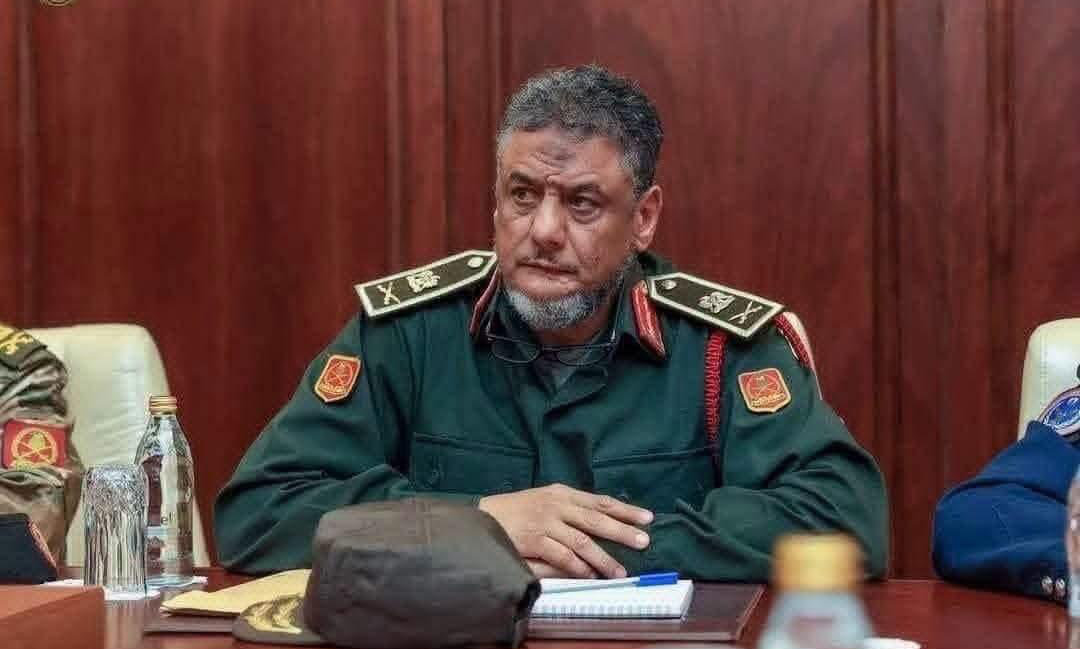
Despite being hailed as an important step towards reconciling public spending and enhancing economic stability, the Unified Development Agreement (UDA) faces significant implementation hurdles. Omar Tantoush, chairman of the House Finance Committee, said the agreement remains ‘unenforceable’ to date, citing a lack of political will among some parties to implement the terms signed in April. These difficulties are compounded by objections from the Libya Development and Reconstruction Fund (LDRF), led by Belqasim Haftar, regarding recent meetings in Tunis, which the LDRF deemed non-binding and potentially obstructive to national development projects.
Financial records reveal a growing fiscal gap, with actual development spending exceeding LYD 27 billion (~USD 4.2 billion) despite an allocated budget of only LYD 20 billion (~USD 3.1 billion). This discrepancy underscores the difficulty of controlling expenditure and addressing financing shortfalls. The agreement, which was supported by Boulos’ diplomatic efforts, remains contingent on the parties’ commitment to transparency and effective oversight mechanisms.
Meanwhile, the Central Bank of Libya (CBL) has launched a major intervention to curb the widening gap between official and parallel-market exchange rates. In May and June 2026, the CBL injected USD 6 billion into the local market. The bank said this liquidity significantly exceeds actual market needs and is intended to dampen speculation driven by political rumours and global oil price volatility.
The CBL’s strategic vision for the Libyan dinar emphasises that the currency’s value is fundamentally tied to oil production levels and global market prices. The bank’s management stresses that recovery depends on rationalising public spending, diversifying revenue streams and maintaining an exchange rate commensurate with the economy’s actual resources. To counter market instability, the CBL announced that it is preparing new financial and monetary tools and pledged to take strict measures against currency speculators in coordination with relevant state authorities. By aggressively managing the money supply, the CBL aims to restore confidence in the local currency and neutralise the impact of political stagnation on Libya’s oil-dependent economy.
For now, however, the UDA functions more as a rhetorical framework than a binding reality. It exposes the tension between the CBL’s attempts at fiscal discipline and the decentralised, patronage-based spending of competing actors. By relying on major liquidity injections to mask structural deficits, the state is offering only a temporary buffer against inflation rather than a route to long-term stability. Unless the agreement can enforce transparent centralised control over expenditure, Libya will remain trapped in a cycle in which uncontrolled spending and speculative volatility continue to undermine both the national economy and the value of the dinar.
This excerpt is taken from our Libya Politics & Security weekly intelligence report. Click here to receive a free sample copy. Contact info@menas.co.uk for subscription details.