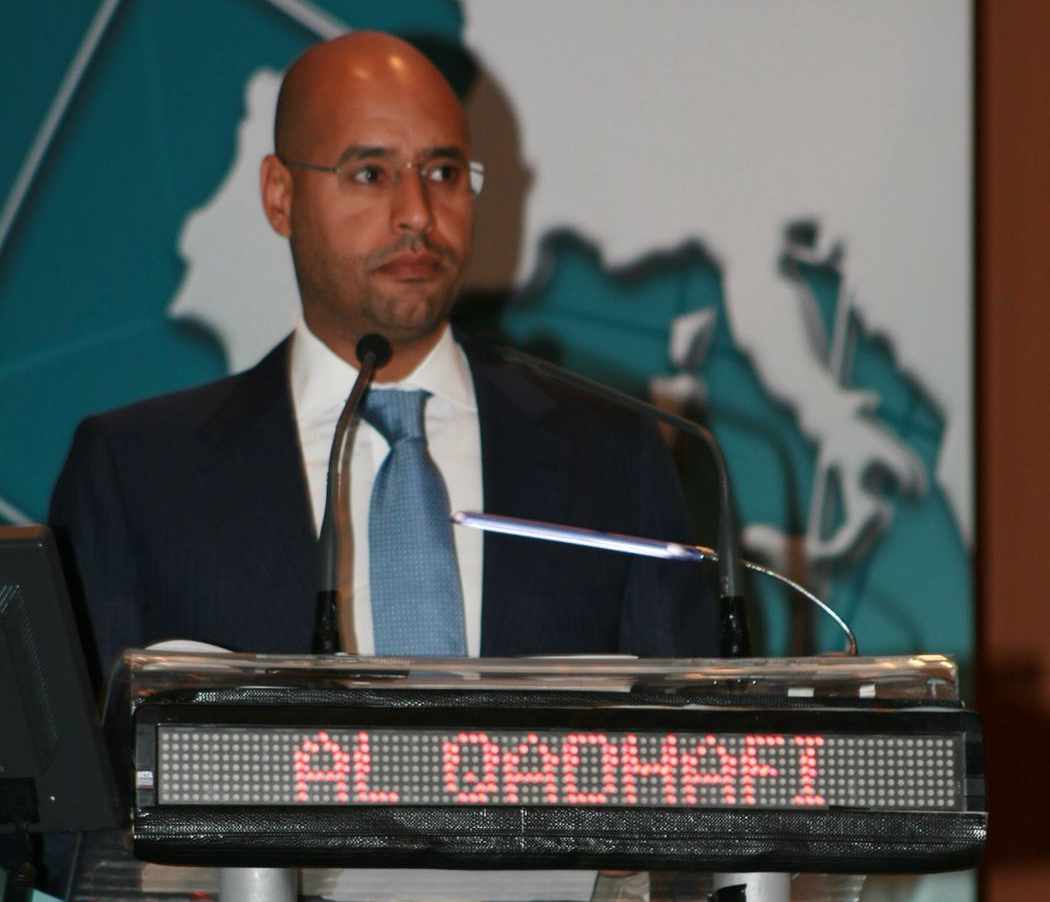
Saif al-Islam Gaddafi
The security landscape in Libya has shifted dramatically following the confirmed assassination of Saif al-Islam Gaddafi on the afternoon of February 3. According to reports, four unidentified gunmen disabled surveillance cameras before storming Gaddafi’s residence in Zintan. Gaddafi, 53, was shot and killed, having reportedly confronting the assailants – who fled the scene and remain at large. Attorney General Al Sadiq Al Sour has launched a formal inquiry. On February 4, his office confirmed via forensic examination that death was caused by multiple gunshot wounds.
High-ranking members of Gaddafi’s political and personal circle characterised the deceased as a martyr, a sentiment echoed by a significant portion of the Libyan population who remain loyal to the legacy of the former regime, known as the Greens. Conversely, the news was met with celebrations and fireworks in cities associated with the 2011 uprising and/ or controlled by Islamis factions such as Misrata.
Supporters of Gaddafi issued a formal statement vehemently condemning the assassination and stating that this act of violence would not deter them from ‘pursuing their path toward restoring the prestige of the state and safeguarding its independence and unity’. The statement stressed that Gaddafi’s death would not obscure the political project he had been advancing and asserted that the ideas Gaddafi had championed in recent years had become deeply rooted in the consciousness of a broad segment of the Libyan populace. These same supporters went on to describe themselves as an indivisible bloc committed to continuing their political struggle in accordance with what they termed a ‘national project’ aimed at ensuring Libyan sovereignty and establishing the authority of the people.
The domestic outcry was paralleled by expressions of concern by various international actors and human rights groups, with Amnesty International stating that the killing highlighted a pervasive climate of impunity in Libya. The organisation warned that such an environment continued to fuel crimes under international law and other violations by unaccountable militias and armed groups. It called for a prompt, independent, impartial, and transparent investigation, insisting that all those suspected of responsibility must be brought to justice in fair trials.
On 4 February, Mohamed al-Menfi, the head of the Presidential Council, also issued a statement characterising the murder as a deliberate attempt to undermine national reconciliation and disrupt the path toward free and fair elections. Similarly, the United Nations Support Mission in Libya (UNSMIL) expressed profound dismay over the violence and stated that the attack underscores the urgent need for the rule of law, whilst the African Union echoed calls for a transparent inquiry, and warnings that such acts of violence threaten the country’s political transition.
The political significance of Saif al-Islam Gaddafi cannot be overstated, given his history as the once-presumed successor to the country’s former long-time leader Muammar Gaddafi (1969 – 2011). Though a deeply polarizing figure – viewed by some as a potential reformer prior to 2011 and by others as a key architect of the crackdown on the uprising – he had remained a potent symbol of the previous era. After his capture in late 2011 by the Abu Bakr al-Siddiq Battalion, he had lived in Zintan under a complex arrangement whereby his former captors ultimately became his protectors. Despite being sentenced to death in absentia by a Tripoli court in 2015 and being subject to an International Criminal Court arrest warrant for crimes against humanity, he re-emerged in 2021 as a presidential candidate. His candidacy was widely seen as a major factor in the subsequent stalling of the electoral process, as rival factions sought to prevent him from standing.
Speculation regarding the perpetrators is rife. Some associates of the Gaddafi family have pointed towards Saddam Haftar, the Deputy Commander of the Libyan Arab Armed Forces (LAAF) – alleging a strategic motivation to eliminate a political rival of his and his father’s, Khalifa Haftar. Others circulated rumours involving the 444 Combat Brigade, led by Mahmoud Hamza, known for his Islamist orientation and links to controversial hardline Grand Mufti, Sheikh Sadiq al-Ghariani – though the unit notably issued a categorical denial on 4 February. The timing of the assassination is particularly sensitive, occurring just as UNSMIL Special Representative Hanna Tetteh prepares to set out a new political approach, and amidst intensifying discussions between various Libyan factions and international actors.
The potential for retaliation remains a primary security concern. While the Green movement lacks the formal military structure to launch a large-scale campaign, targeted revenge attacks or localized civil unrest could emerge. The loss of such a central symbolic figure may either force a new compromise regarding election laws or lead to further disenfranchisement and division complicating the already arduous task of achieving long-term stability and national unity in Libya.